
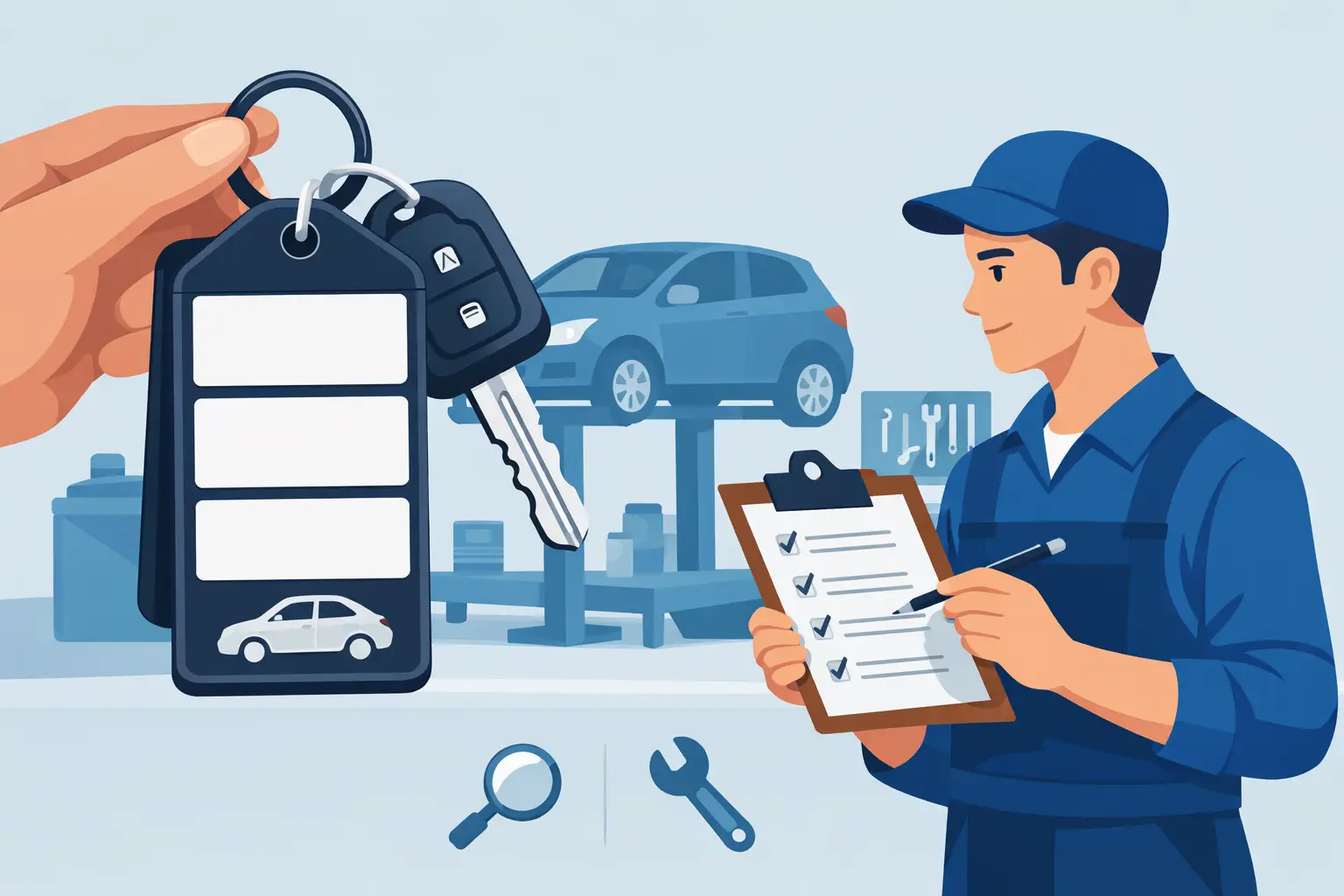
A vehicle key tag is a small item with a big job. It needs to keep keys matched to the right vehicle, give technicians and advisors useful information at a glance, and survive constant handling around a busy service department. A proper custom key tag review should focus less on appearance alone and more on whether the tag makes daily workflow faster, clearer, and less prone to costly mix-ups.
For repair shops, tire stores, detailers, oil change centers, and dealership service lanes, the best custom key tag is one your team can use without stopping to think about it. The tag should be easy to write on, easy to read from a distance, and built to stay attached until the work is complete.
Custom Key Tag Review: Start With Daily Use
The first question is simple: what information does your team need to see when they pick up a key set? Many shops need a customer name, vehicle year and model, license plate number, repair order number, service advisor initials, or parking location. A tag with too little write-on space creates cramped handwriting and forces staff to add loose paper notes. That adds time and increases the chance that information gets separated from the keys.
A good layout puts the most important fields first. If your shop organizes work by repair order number, that number should be prominent. If vehicles are parked across multiple rows, a clearly marked location field may be more valuable. There is no single layout that suits every operation. A quick-lube shop may prioritize vehicle information and service due dates, while a dealership may need room for stock numbers, technician assignments, and customer contact details.
Custom printing matters because it lets the tag follow your existing process instead of asking your staff to create a workaround. Your company name, phone number, logo, service department details, and preprinted fields can all be placed where they are useful. The goal is not to fill every available inch with branding. The goal is a tag that supports accurate handling from check-in to pickup.
Material Makes a Practical Difference
Key tags get pulled from hooks, dropped on counters, carried outside, and handled by people with dirty or wet hands. Thin paper tags may be inexpensive upfront, but they can tear, crease, or become difficult to read before the vehicle is ready. For a professional service environment, durability is part of the value calculation.
Heavy card stock works well when the tag is used for a short service visit and written on with standard pens or markers. It offers a clean, familiar feel and keeps costs reasonable for high-volume shops. Synthetic or plastic-style materials may be a better fit where tags are exposed to moisture, grease, snow, or repeated handling. They generally cost more, but they can reduce replacements and keep vehicle information legible through a longer repair process.
The trade-off is worth considering carefully. The toughest material is not always the best choice if it does not accept the pen your advisors use at the counter. Before placing a large order, test the intended writing tool. A surface that resists smudging but will not hold ink reliably can create more problems than it solves.
Check the Hole, Ring, and Attachment Point
The attachment area is easy to overlook until tags begin tearing off key rings. A reinforced hole or a durable punched opening helps the tag stay in place during routine handling. The hole size should also work with the rings, hooks, or key cabinet system already in your shop.
If your process relies on wire rings, confirm that the tag can be added quickly without forcing staff to struggle with the opening. If keys are hung on board hooks, make sure the hole is large enough to move on and off smoothly. These small details affect check-in speed, especially when the drive-thru is busy.
Numbering and Color Coding Improve Control
Sequential numbering is one of the most useful options for shops managing many vehicles at once. A unique number can connect the physical key set to a repair order, digital file, parking spot, or key cabinet position. It is particularly useful when several employees are moving vehicles throughout the day.
Preprinted numbers also make verbal communication clearer. Saying, “The keys for tag 1847 are in the east lot” is more reliable than relying on a customer name that may be misspelled, difficult to pronounce, or shared by multiple customers. For dealerships and larger independent shops, numbered tags create a simple layer of accountability without adding a complicated system.
Color coding can help too, but only when it has a defined purpose. Some operations use different colors for waiting customers, drop-offs, completed vehicles, loaners, or internal work. Others assign colors by department. A color system works when every employee understands it and uses it consistently. If colors are chosen only because they look good, they can become visual noise.
Consider readability before committing to a dark background or busy design. High-contrast printing and a clear writing panel are usually more valuable than a decorative look. Black text on a light surface remains one of the easiest combinations to read under shop lighting, at the service counter, and outdoors.
Review the Print Details Before Ordering
A custom tag should represent your business professionally, but operational information comes first. Your logo and business name should be sharp and recognizable. Phone numbers, addresses, website details, and service hours should be accurate and large enough to read. If customers may take the tag home temporarily, these details can also make it easier for them to contact the right department.
Proofing is where many avoidable errors are caught. Check spelling, phone numbers, unit numbers, and the fields your staff will complete by hand. Look at the design as if you were a new advisor on a Monday morning: can you identify where to write each piece of information in seconds?
It also helps to verify how variable data will be handled. If you want numbered tags, confirm the starting number, numbering range, placement, and whether duplicate numbers are needed. If different departments require different versions, keep the distinctions obvious. A tire-storage tag should not be confused with a general repair-order tag simply because the designs are nearly identical.
Before approving a final order, ask these practical questions:
- Will the tag accept the pens and markers used at our counter?
- Is there enough room for the information our staff actually writes?
- Does the hole work with our current key rings, hooks, or cabinet system?
- Can employees quickly identify status, number, or department from the layout?
Cost Is More Than the Per-Tag Price
Price matters, particularly for businesses ordering supplies repeatedly. But the lowest per-unit cost is not automatically the lowest operating cost. Tags that tear, smudge, or confuse staff may create replacement waste, slow down vehicle retrieval, and make customers wait longer at pickup.
Order quantity is another balance. Larger runs usually reduce the cost per tag and help ensure you do not run out during a busy season. On the other hand, ordering too far ahead can leave you with outdated tags after a phone number, logo, process, or location changes. For shops that update their branding or procedures often, a moderate quantity may be the smarter choice.
Turnaround is equally practical. Key tags are a working supply, not a promotional extra. When your last box is nearly gone, you need a supplier that can produce accurately and keep your operation moving. StickerPlanet Canada focuses on repeat-use print products for automotive businesses, where dependable production and clear customization matter more than unnecessary extras.
Match the Tag to Your Service Process
The best custom key tag is the one that fits the work your shop already performs. A compact tag may be ideal for a high-volume oil change center where vehicles move quickly. A larger tag with detailed fields can be more useful for diagnostic work, fleet service, collision-related repairs, or dealership departments handling multiple approvals.
Start by watching your team use its current tags for a day. Notice where they write outside the lines, add tape, use abbreviations, or ask each other where a vehicle is parked. Those are not minor habits. They point directly to the information and layout your next tag order should address.
Choose a tag that keeps keys identified, instructions visible, and staff moving with confidence. When the counter is full and the phone is ringing, that kind of clarity is worth far more than a tag that merely looks custom.