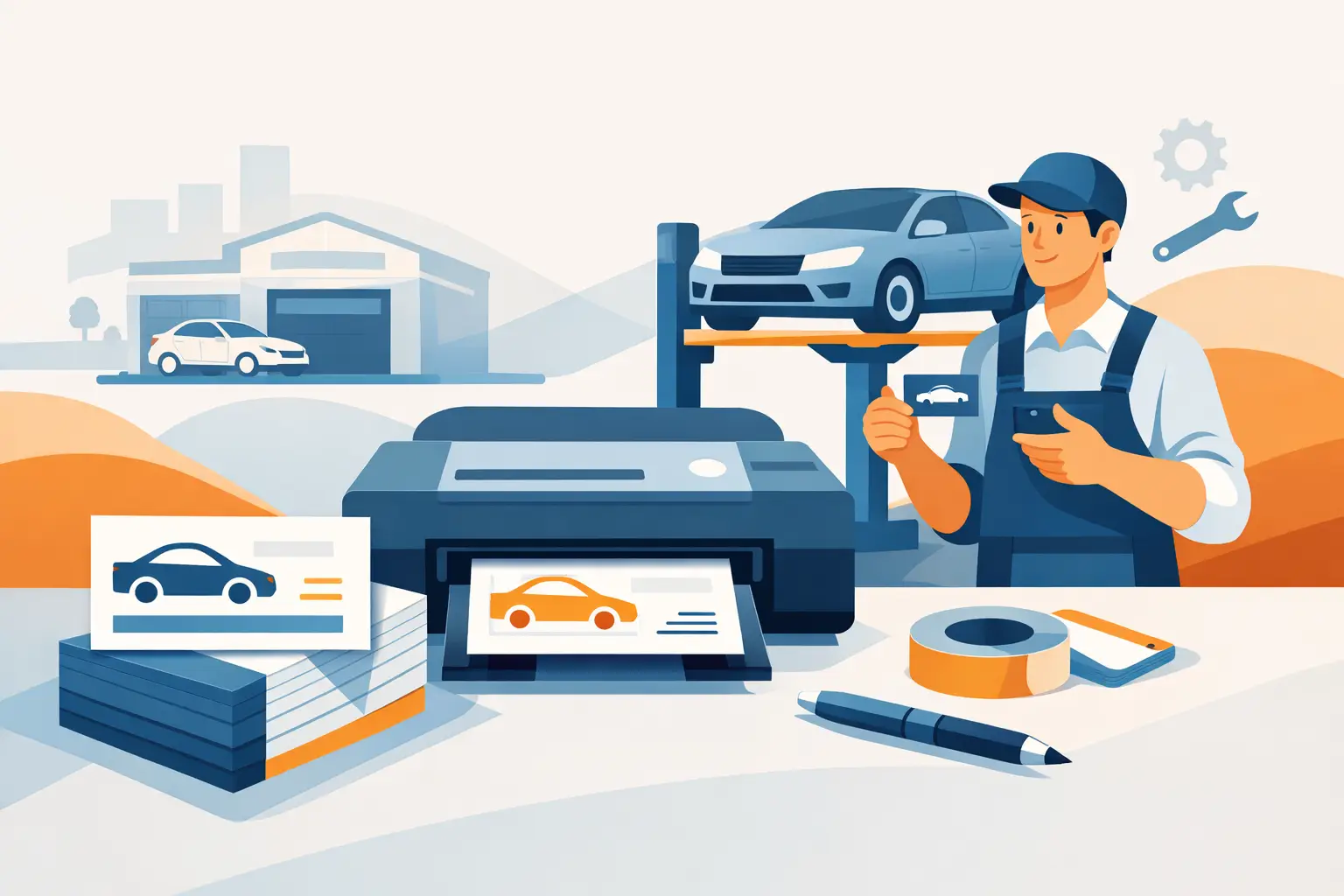
A customer picks up their vehicle, pays the invoice, and says they will be back when the next service is due. That is the right moment to hand them something they can keep. Business card printing for garages is not just a basic branding task. A well-made card puts your phone number, location, services, and shop name in a customer’s wallet, glove box, or kitchen drawer when they need it.
For independent repair shops, tire centers, oil change businesses, and detailing operations, a business card has a simple job: make it easy for people to call your shop again. It also gives technicians and service advisors a practical item to hand out after a conversation, estimate, roadside referral, or fleet visit. The details matter because a card that is hard to read, poorly printed, or missing key information can cost you the follow-up work it was meant to support.
What Garage Business Cards Need to Do
A garage business card should work quickly. Customers should be able to see who you are and how to reach you without studying the card. That sounds obvious, but crowded layouts, tiny type, and too many service claims regularly get in the way.
Put the shop name and primary contact information where they are easy to find. For most garages, that means a clear phone number, street address, website address, and business hours if space allows. If customers commonly text for appointments or estimates, include that number only if your team can respond consistently. A card is a promise of access, so avoid listing a contact channel that goes unanswered.
The card should also tell people what your shop does. A short service line such as auto repair, tires and alignment, fleet service, oil changes, or detailing can help a new referral understand why they should call. The goal is not to list every service bay capability. It is to give the customer a fast, useful reason to keep the card.
Your cards should support the same clear identity used on service reminder stickers, tire labels, invoices, and shop signage. Repeated colors, logo use, and contact details help customers recognize your business after they leave. That consistency matters especially when they have several local shops competing for their next appointment.
Business Card Printing for Garages: Choose the Right Format
Standard business cards are popular for a reason. They fit wallets, appointment folders, and invoice envelopes, and they are economical to reorder in volume. For most repair shops, the familiar horizontal card is the safest choice because customers can scan the information quickly.
A vertical layout can work when your logo is designed for it or when you want a more distinctive presentation. It is not automatically better, though. If the format forces important text into a cramped space, the standard layout will serve you better. Practicality should lead the decision.
Single-sided cards are effective when the front contains only the essentials and your shop has a straightforward service offering. Double-sided printing gives you more room for services, hours, a map cue, seasonal promotions, or an appointment reminder. The trade-off is that more space can tempt a business to add too much. Use the back to support the next action, not to turn a business card into a brochure.
For automotive businesses, a double-sided card can be especially useful when one side carries your contact information and the other highlights a focused message. A tire shop may use the back for seasonal tire change reminders. A service center may use it to note maintenance specialties. A detailer may feature a concise list of packages. Keep the message current and relevant to the work you want more of.
Design for the Service Counter and the Real World
Garages are busy environments. Your business cards may be handed out at a counter, tucked into an invoice, passed along by a satisfied customer, or left with a fleet manager. Design them for use in those conditions.
Start with high-contrast colors. Dark text on a light background is usually easiest to read, particularly for phone numbers and addresses. If your brand uses a dark background, make sure the light text is large enough and the print finish does not create glare. A bold logo is valuable, but it should not overpower the information customers need.
Use one or two typefaces at most. Decorative fonts can look good on a screen but become difficult to read at business-card size. Simple, professional lettering helps customers find the phone number quickly when they are standing beside a vehicle or trying to schedule service between errands.
The most useful information usually includes:
- Shop name and logo
- Phone number and website
- Street address or service area
- A short description of your key services
If you include a QR code, give it a clear purpose. Send it to appointment booking, directions, a service request form, or a current offer. Test it on several phones before printing a full run. A code that leads nowhere useful wastes space and can make the card look less dependable.
Paper Stock and Finish Affect How Your Shop Is Perceived
Paper choice is not only about appearance. It affects how the card feels, how it holds up, and whether customers can write on it. A heavier stock generally gives a more substantial first impression than thin paper. It feels intentional and is less likely to bend in a wallet or get damaged in a glove box.
A matte finish is often a practical choice for garages because it reduces glare and can be written on with a pen. This is useful if a service advisor wants to note a next service date, a direct extension, or a technician’s name. Gloss finishes can make colors stand out, but they may be harder to write on and can show fingerprints more easily.
There is no single best finish for every shop. A premium gloss card may fit a high-end detailing business with strong photography and a polished brand look. A busy repair garage may get more value from a durable, easy-to-read matte card that supports handwritten follow-up. Choose based on how the card will actually be used.
Build Cards Into Your Daily Customer Retention Process
Business cards work best when they are part of a repeatable process, not a stack hidden behind the counter. Keep them at every customer-facing point: the service desk, cashier station, vehicle pickup area, and parts counter. Give technicians a small supply if they regularly speak directly with customers or fleet contacts.
Train staff to hand out cards with a reason. Instead of silently placing one on the counter, a service advisor can say, Keep this card and call us when you are ready to book your tire change. That small instruction connects the card to a future need.
Cards also work well alongside service reminder products. An oil change reminder in the windshield and a business card in the invoice create two separate touchpoints. One reminds the customer when service is due; the other makes it clear where to call. For shops that rely on returning customers, that pairing can support stronger retention without adding complexity at the counter.
At StickerPlanet Canada, automotive businesses can order printed materials that support the full customer handoff, from reminder labels to business cards. Keeping those items aligned in color, contact details, and message helps your operation look organized every time a vehicle leaves the bay.
Avoid Common Business Card Printing Mistakes
The most common mistake is trying to fit everything on the card. Your business history, complete menu of services, multiple phone numbers, social accounts, certifications, and promotions do not all need to appear at once. Prioritize the contact details and services that drive calls.
Another issue is failing to proof the final artwork. Check every phone number, email address, business hour, and spelling before approving print. Have a second person review it too. Reprinting due to one incorrect digit is avoidable, and distributing incorrect cards can send work to the wrong place.
Finally, order enough cards to make them useful. A small batch may seem economical, but it can disappear quickly when every invoice, estimate, and referral includes one. Ordering a practical quantity keeps your team from rationing cards when they should be using them freely.
A business card will not replace good service, fair estimates, or a well-run shop. It gives satisfied customers a simple way to remember the business that earned their trust. Keep the design clear, the information current, and the cards within reach of every employee who speaks with customers.