A customer pulls out of your bay with fresh oil, rotated tires, or a completed re-torque. The work is done, the invoice is paid, and then the real question starts: will that customer come back on time, and will they come back to you? That is the practical reason why garages use reminder labels. They turn one completed service into a visible, low-cost prompt that keeps your shop in front of the customer long after the visit ends.
For most service businesses, reminder labels are not an extra. They are part of the workflow. A small sticker on the windshield, door jamb, service book, or another approved location gives the driver clear information about what was done and when the next service should happen. It helps the customer remember, and it helps the shop protect repeat business.
Why do garages use reminder labels in the first place?
Garages use reminder labels because customers forget. That is not a criticism. It is just how vehicle ownership works. People remember a warning light when it comes on. They remember a problem when the brakes start making noise. They do not always remember a mileage-based maintenance interval from three months ago.
A reminder label fixes that gap with something simple and immediate. It puts the next due date, mileage, service type, or shop name where the customer will actually see it. Every time they sit behind the wheel, the reminder is there.
That visibility matters more than many shops realize. A text message gets swiped away. An emailed service reminder might never be opened. A printed label inside the vehicle stays in place and keeps working every day.
Reminder labels help bring customers back
The most obvious business benefit is retention. A reminder label gives customers a clear reason to return and a clear path back to the same shop. If the label includes your business name, phone number, or branding, it does more than remind them about maintenance. It reminds them who handled the last service.
That matters for independent garages, quick lube centers, dealerships, tire shops, and detailers alike. Service businesses often win repeat work through consistency, not just price. A customer who can quickly identify the last shop they used is more likely to call that shop again instead of starting from scratch.
This is especially useful for recurring services like oil changes, tire rotations, seasonal tire work, re-torque checks, maintenance inspections, and detailing follow-ups. These are not one-time jobs. They are repeat opportunities. A good label keeps those opportunities visible.
They make maintenance easier for the customer
A lot of garages use reminder labels because they make vehicle care easier to understand. Not every customer tracks service intervals closely. Some know their exact schedule. Others just want someone to tell them when to come back.
A well-designed label does that without confusion. It can show the last service date, next due mileage, next due date, tire re-torque timing, or a recommended follow-up. It gives the customer a practical reference point instead of forcing them to rely on memory.
That improves the service experience. Shops that make maintenance simple tend to earn more trust. The customer does not have to guess whether they are overdue. They can see it.
There is a trade-off, though. The reminder needs to be accurate. If your staff writes inconsistent mileage, unclear dates, or service intervals that do not match the vehicle or oil type, the label can create confusion instead of clarity. The label itself is simple, but the process behind it still needs discipline.
Why do garages use reminder labels instead of digital reminders alone?
Digital reminders have value. Many shops use text, email, and CRM follow-ups, and those tools can work well. But garages still use physical reminder labels because they do something digital systems cannot always do reliably: stay in view at the exact moment the customer is using the vehicle.
A label does not depend on open rates, app settings, or whether the customer gave the right email address. It is visible during daily driving. It works without batteries, syncing, or software updates. For a busy service operation, that kind of reliability still matters.
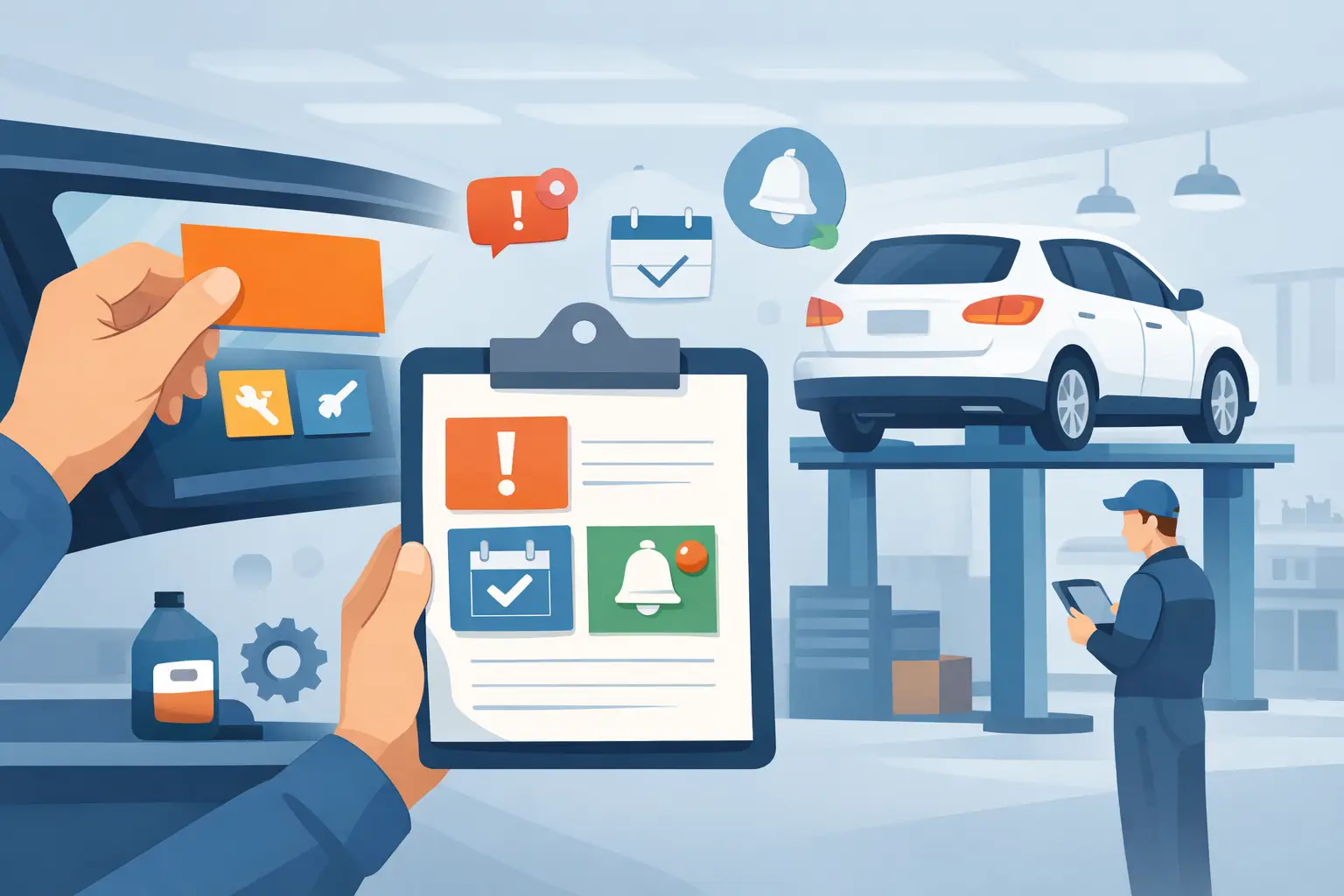
The smartest approach is not print versus digital. It is print plus digital. A reminder label handles the day-to-day visual cue inside the vehicle, while digital reminders support follow-up campaigns and appointment scheduling. One is passive and constant. The other is active and timed. Together, they cover more ground.
They support shop branding in a practical way
Reminder labels are also branding tools, but in a very workmanlike sense. This is not about flashy marketing. It is about keeping your name attached to the service you performed.
When a customer sees your logo, shop name, or contact information on a clean, durable label, it reinforces professionalism. It shows that your process is organized. It helps your business look established and consistent. That may sound small, but repeated small details are often what shape customer confidence.
For dealerships and larger service departments, standardized labels also help create uniform customer communication across staff and locations. For smaller shops, they help present the business as buttoned-up and dependable.
Custom labels usually offer the strongest branding value because they connect the next service reminder directly to your business identity. Generic labels still work for function, but custom versions do more to protect repeat traffic.
They can support compliance and follow-up procedures
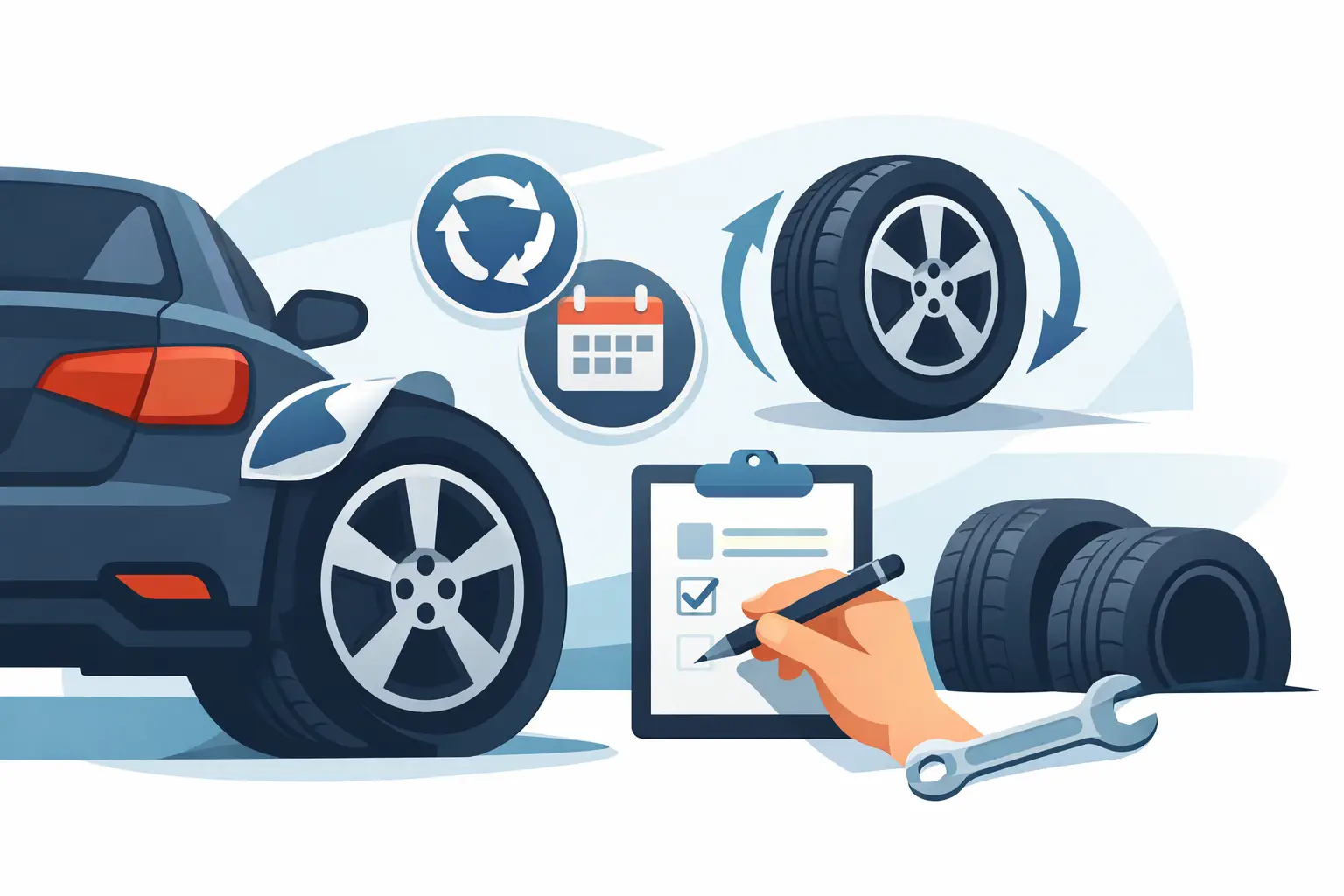
Not every reminder label is about the next oil change. Shops use labels for several operational reasons, including tire re-torque reminders, tire storage identification, PDI process tracking, maintenance light notes, CSI prompts, and dealer identification.
In these cases, the label is not only about marketing. It is about process control. It helps staff and customers keep track of what needs to happen next. A tire re-torque label, for example, can reinforce the importance of returning after wheel service. That protects both the customer and the shop by making the follow-up expectation visible.
This is where reminder products become more than simple stickers. They become part of standard operating procedure. When used consistently, they reduce missed steps and create a cleaner handoff between service and customer care.
Good reminder labels reduce friction at the counter
A lot of shop efficiency comes down to avoiding repeated explanations. If a label clearly shows the next due date or mileage, the customer has one less thing to remember from the service advisor conversation.
That saves time now and later. It reduces calls like, “When was I supposed to come back?” It also makes future scheduling easier because the customer already has a reference in the vehicle.
The best labels are easy to read, quick to fill out, and durable enough to stay legible over time. If the print smears, the adhesive fails, or the format is cramped, the label becomes a weak point instead of a useful tool. That is why material quality matters. Shops need products made for regular handling, changing temperatures, and daily use.
Not every shop uses them the same way
There is no single rule for how every garage should use reminder labels. A quick lube shop may focus heavily on oil change stickers with date and mileage fields. A tire shop may rely more on re-torque reminders and storage labels. A detail business might use service follow-up stickers for repeat cleaning schedules. A dealership might need multiple label types across service, delivery, and internal processing.
What matters is matching the label to the service model. If a shop performs repeat interval work, reminder labels usually make strong business sense. If the shop handles mostly one-off repairs, labels may still help, but the value may be more limited unless they are tied to inspections or future maintenance recommendations.
That is why product selection matters. A generic one-size-fits-all sticker does not always fit the actual workflow. Shops often get better results with formats designed around their day-to-day service categories.
A small product with a long shelf life in the business
Garages use reminder labels because they are simple, affordable, and effective. They help customers remember service. They help shops keep their name in front of the driver. They support follow-up work, reduce missed maintenance, and add structure to the service process.
Most importantly, they keep doing their job after the customer leaves. In a business where repeat visits matter, that is hard to ignore. If your shop depends on retention, clear communication, and consistent presentation, reminder labels are not just useful. They are one of the easiest operational tools to put to work. For shops that need dependable, repeat-use reminder products, StickerPlanet Canada is built around exactly that kind of day-to-day business need.
The best shop tools are often the ones customers barely think about, but act on anyway.