
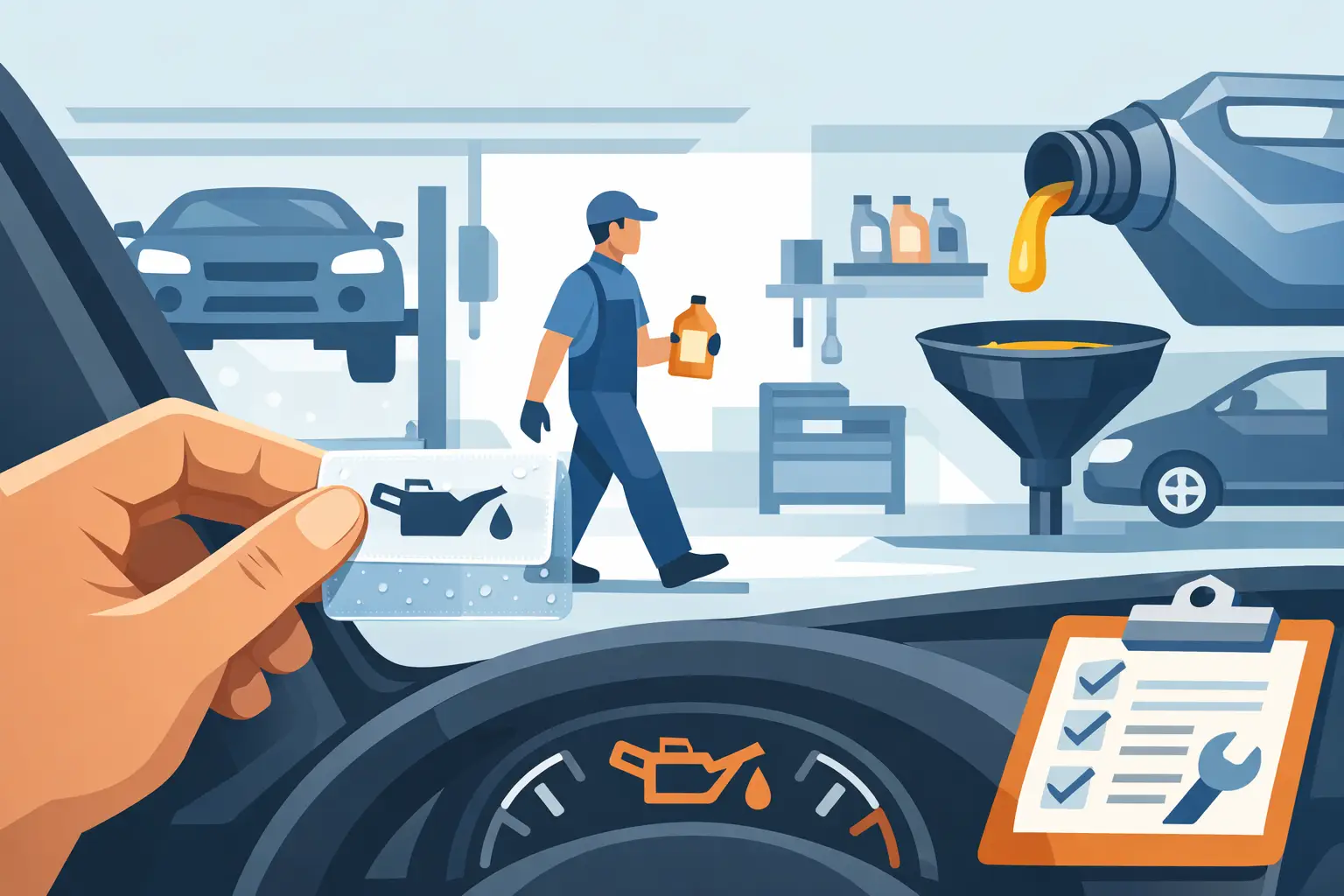
A customer pulls out of your bay with fresh oil, a checked-over vehicle, and one simple prompt for the next visit. That small label matters more than most shops give it credit for. Oil stickers are one of the lowest-cost tools in an automotive service business, but they do real work every day – reminding customers when to come back, keeping your branding in front of them, and helping your team stay consistent at delivery.
For quick lube centers, repair shops, dealerships, and garages, the right reminder sticker is not just a finishing touch. It is part of the service process. If it smears, falls off, hardens in the sun, or becomes unreadable after a few weeks, it stops doing its job. A good oil change sticker needs to hold up in real shop conditions and still be easy for customers to read at a glance.
Why oil stickers still matter
Most service businesses already know repeat traffic drives profit. The hard part is getting customers back at the right time. Text reminders, email campaigns, and service software all have their place, but none of them replace the visibility of a reminder fixed directly inside the vehicle.
That is why oil stickers continue to be standard across the industry. They stay with the car. They are visible every time the customer gets in. They work whether the driver checks email or not. And they make the next service interval clear without requiring a conversation weeks or months later.
There is also a branding benefit. When the sticker carries your shop name, phone number, and next-service details, it acts as a small but steady advertisement. If the customer forgets where they had the last service done, the sticker answers that question immediately.
What makes a good oil sticker
Not all reminder labels perform the same way. In a busy shop, speed matters. At the vehicle level, durability matters. On the customer side, readability matters. If one of those three is missing, the sticker becomes a weak point in the process.
A good oil sticker should be easy to write on without smudging. That sounds basic, but it matters when advisors and technicians are moving fast. Clean writing space for date, mileage, and service details makes the label useful instead of cluttered.
Adhesive is another practical issue. The sticker needs to stay put on the glass without curling or dropping off early, but it should also remove cleanly when it is time for the next one. Cheap material can turn a basic reminder into an irritation for the customer.
Print quality matters too. Faded text, weak contrast, or poor layout can make a sticker hard to read from the driver seat. The best-performing designs keep the message simple: what was done, when the next visit is due, and who performed the service.
Oil stickers and customer retention
Shops often spend heavily trying to attract first-time customers and then underinvest in the basics that help bring them back. Oil stickers work because they support a habit. Every time a customer sees the sticker, your business stays in the decision set.
That is especially useful when service timing is flexible. Some drivers return exactly on mileage. Others go by season, schedule, or memory. A visible reminder closes that gap. It reduces the chances that the customer delays maintenance or ends up at a competitor simply because your shop was not top of mind.
For multi-bay operations and dealership service departments, consistency matters just as much as retention. When every vehicle leaves with a clean, readable reminder sticker, the customer experience feels more organized. Small operational details like that help reinforce trust.
Choosing the right format for your shop
The right sticker depends on your workflow. Some businesses prefer a compact label that only includes next service mileage and date. Others want space for oil grade, filter details, technician notes, or branding. Neither option is automatically better. It depends on how much information your team actually uses and whether extra fields help or slow the process down.
A quick lube business usually benefits from a simple format that can be completed fast and read fast. A full-service repair shop may want more detail, especially if it handles different maintenance packages and wants the sticker to support follow-up conversations.
Customization also matters if you want the label to carry your logo, phone number, website, or dealership name. That turns a reminder into branded service collateral. For businesses focused on repeat business, that is a practical upgrade, not a cosmetic one.
Where cheap oil stickers cause problems
The cost difference between low-grade labels and well-made reminder stickers is usually small. The operational difference can be much bigger.
If the writing surface resists pen ink, your staff wastes time trying to make it legible. If adhesive performance is inconsistent, stickers lift at the corners or fall off the glass. If material quality is poor, heat and sunlight can make the label brittle or unreadable. None of those issues create a major crisis on their own, but they chip away at consistency, and consistency is what service businesses depend on.
There is also the brand effect. A sticker with weak print, poor alignment, or low-quality stock reflects on the shop using it. Customers may not analyze it, but they notice when details look rushed or cheap. In automotive service, presentation still matters.
How oil stickers fit into a stronger service process
The best shops do not treat reminder labels as an afterthought. They build them into the closeout routine. Once the service is complete, the next interval is recorded, the sticker is applied neatly, and the customer is told exactly what it means.
That last part helps. A simple line at handoff – something like, your next oil service is marked right on the windshield – increases the chance the customer actually notices and uses it. The sticker works best when it supports a clear service recommendation.
It also helps to keep the layout standardized. If every advisor fills out the sticker differently, the result looks inconsistent. A clean process reduces errors and keeps the information easy to understand.
For larger operations, oil stickers can work alongside tire rotation reminders, maintenance light labels, detailing reminders, and dealer ID labels to create a more complete service communication system. Each piece has a narrow job, but together they make the customer journey clearer.
Custom oil stickers vs stock designs
Stock reminder labels are a good fit for many shops. They are fast, practical, and cost-effective. If your primary need is a dependable supply of easy-to-use oil change reminders, stock formats often cover the essentials.
Custom oil stickers make more sense when brand visibility, layout control, or specific service fields matter to your operation. A custom version can include your business name, contact details, service intervals, and a design that matches the rest of your printed materials. For dealerships and growing independent shops, that added consistency can be worth it.
The choice comes down to volume, budget, and process. If you run high volume and want every vehicle leaving with your branding clearly displayed, custom is usually the stronger long-term option. If you need a straightforward reminder label that performs well and arrives quickly, stock may be the better fit.
What to look for in a print supplier
If you order oil stickers regularly, reliability matters as much as product quality. Running out of routine service labels creates unnecessary friction at the counter and in the bay. A dependable supplier should offer consistent print quality, durable materials, clear customization options, and turnaround times that match the pace of an active service business.
That is where specialization helps. A print company that already serves automotive shops understands how these products are used, what details matter, and why repeatability is critical. StickerPlanet Canada focuses on practical service print products built for everyday shop use, which is exactly what operations-focused buyers need.
The other factor is value. Lowest price alone is rarely the right metric. If a slightly better label saves time, stays readable longer, and supports better customer retention, it usually pays for itself quickly.
A small label that does real work
Oil stickers are not complicated, and that is exactly why they work. They give customers a clear next step, support repeat business, and add consistency to your service process without slowing your team down.
If you rely on service intervals to keep bays full, it makes sense to treat the reminder sticker like an operational tool, not a disposable extra. The right one keeps your name in the vehicle, your next visit in front of the customer, and your process looking professional every time.