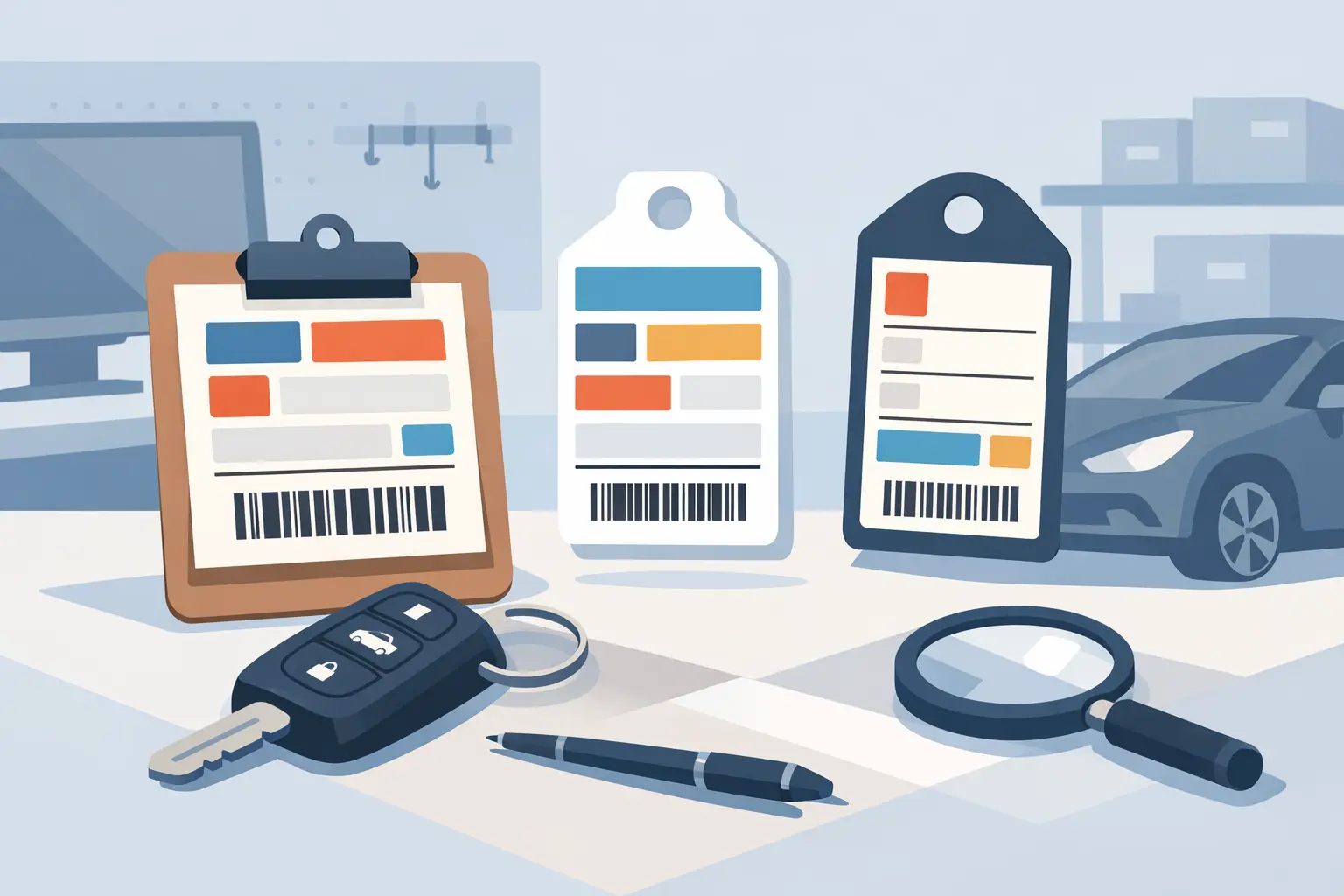
A vehicle can leave your lot with a clean delivery checklist, a fresh service visit, and a satisfied customer, then become just another car in a crowded parking lot. Dealer identification labels keep your business name, phone number, and service department in front of that customer long after the original sale or repair. The best dealer identification label examples are not flashy. They are clean, readable, durable, and placed where customers can find them when they need to book service.
For dealerships, independent garages, and quick-lube shops, these labels are a low-cost retention tool. They identify who serviced or sold the vehicle, make it easier for the next owner to trace its history, and give customers a direct path back to your shop instead of a competitor.
What a Dealer Identification Label Should Do
A dealer ID label has one job: make it easy to identify and contact your business. That sounds simple, but a crowded design, weak adhesive, or outdated phone number can make the label useless.
At minimum, include your business name, a main phone number, and your city or location. Many shops also add their website, service department extension, logo, and a short line such as “Proudly Serviced By” or “Sold and Serviced By.” If you operate multiple locations, use the specific location’s contact information rather than a general corporate number whenever possible. Customers calling the wrong branch creates unnecessary friction at the exact moment you want their business.
Your label should look like part of an organized service process. Use a legible font, strong contrast, and enough open space for the information to be read quickly. A tiny logo may look polished on screen but does little on a label viewed through a windshield or inside a door opening.
Dealer Identification Label Examples That Work
The right format depends on how your shop interacts with vehicles. A new-car dealership, used-car lot, tire center, and repair garage may all use dealer labels differently. These examples show the most practical approaches.
Standard Service Department Identification Label
This is the most common option for repair shops and dealerships. It typically includes the dealership logo, business name, street address, phone number, and service hours. A short message such as “For Service, Call Us First” helps direct customers back to your department.
This label works well for vehicles that receive regular maintenance at your facility. It reinforces your name every time a customer opens the driver-side door or looks for service information. Keep the design focused. The customer needs a phone number more than a long list of services.
Sold By Dealer Label
A sold-by label is useful for vehicle sales departments, especially where used vehicles may change hands several times. It usually features the dealership name, location, phone number, and a statement such as “Originally Sold By” or “Delivered By.”
This format can help create a lasting connection with buyers without pretending that the label is an official manufacturer record. It is especially useful when a future owner finds the label and needs a local contact for parts, maintenance, or vehicle history questions.
Branded Service Reminder and Dealer ID Combination
Some shops combine dealer identification with a maintenance reminder. For example, the top portion may show the next oil change date and mileage, while the bottom portion displays the shop name, phone number, and logo.
This option gives the label a clear reason to stay visible. The customer sees the next service interval and knows exactly where to call. It is a practical choice for oil change centers, independent repair facilities, and dealerships with high-volume express service lanes.
The trade-off is available space. If the reminder fields are too small or the branding takes over the label, neither function works well. Use a layout that leaves enough room for service advisors to write clearly.
Tire Service Identification Label
Tire shops and service departments can use a dealer label that references tire work, such as installation, seasonal changeover, rotation, or re-torque requirements. The label can include the shop’s contact details alongside a brief service note.
For example, a tire re-torque reminder may state the recommended follow-up interval, then identify the shop that performed the installation. This is more useful than a generic dealership label because it connects your name to a specific maintenance action. It also gives customers a reason to return before a small issue becomes a complaint.
Detail Department or Reconditioning Label
Detailers and reconditioning departments can use identification labels after a full interior or exterior service. A simple label might list the business name, phone number, and a message such as “Professional Detailing Performed By.”
This works best for recurring detail customers, fleet accounts, and dealerships that want to support their appearance-care services. Avoid promises that are difficult to support, such as permanent protection or guaranteed outcomes. Clear contact information and a professional presentation carry more value than oversized claims.
Fleet or Commercial Vehicle Service Label
Commercial customers need quick access to the shop that knows their equipment and service history. A fleet-focused dealer identification label can include the company name, service department number, account or unit fields, and emergency-hours information if applicable.
Unlike a retail label, this format may need more writing space. A fleet manager may want to record unit numbers, maintenance dates, or internal contact details. In that case, choose a larger label or separate the dealer identification label from the maintenance record. Trying to fit every field onto a small sticker usually leads to unreadable information.
Choosing the Right Placement
Placement matters as much as the design. Many businesses place dealer identification labels on the driver-side door jamb, where they are visible during entry and exit but less likely to interfere with driving visibility. Others use a windshield location when the label also functions as a service reminder.
Before standardizing placement, check the vehicle carefully. Never cover the VIN label, tire and loading information, airbag warnings, emissions information, manufacturer certification labels, or other required safety information. A dealer label should support your operation, not create a compliance problem or make important vehicle information harder to read.
Clean the application area before installation. Dust, silicone-based cleaners, moisture, and textured surfaces can shorten label life. If your team applies labels during delivery or after service, make this a documented step in the process so every vehicle receives the same clean, consistent result.
Design Details That Improve Results
A good dealer ID label does not need a complicated design. It needs the right information in the right order. Put the dealership name first, followed by the easiest contact method. Make the phone number large enough to read without leaning into the vehicle.
Color can reinforce your brand, but contrast comes first. Dark text on a light background is often the safest choice for small-format labels. If your logo contains fine lines or gradients, use a simplified version that reproduces clearly at label size.
Durable materials matter because vehicle interiors and door areas deal with heat, cold, moisture, cleaning products, and frequent use. Cheap paper labels may curl, fade, or leave an unprofessional residue. For a label intended to represent your shop for years, use a material and adhesive suited to automotive conditions.
It is also worth reviewing your labels every year. Phone numbers change, websites are updated, departments move, and brand artwork evolves. Old stock is not a bargain if it sends customers to the wrong number.
Make Dealer Labels Part of the Service Process
Dealer identification labels perform best when they are not treated as an afterthought. Add application to your delivery, PDI, oil change, tire installation, or final quality-control checklist. Train advisors and technicians on the approved placement and make sure they understand which labels are appropriate for each job.
Consistency builds recognition. When every service visit includes a clean, durable label with clear contact information, customers learn where to return. StickerPlanet Canada produces dealer identification labels and related automotive service reminders designed for repeat shop use, helping teams keep that process simple and professional.
The most effective label is the one a customer can still read months later, at the exact moment they need service. Keep it clear, place it carefully, and make the next call back to your shop an easy one.