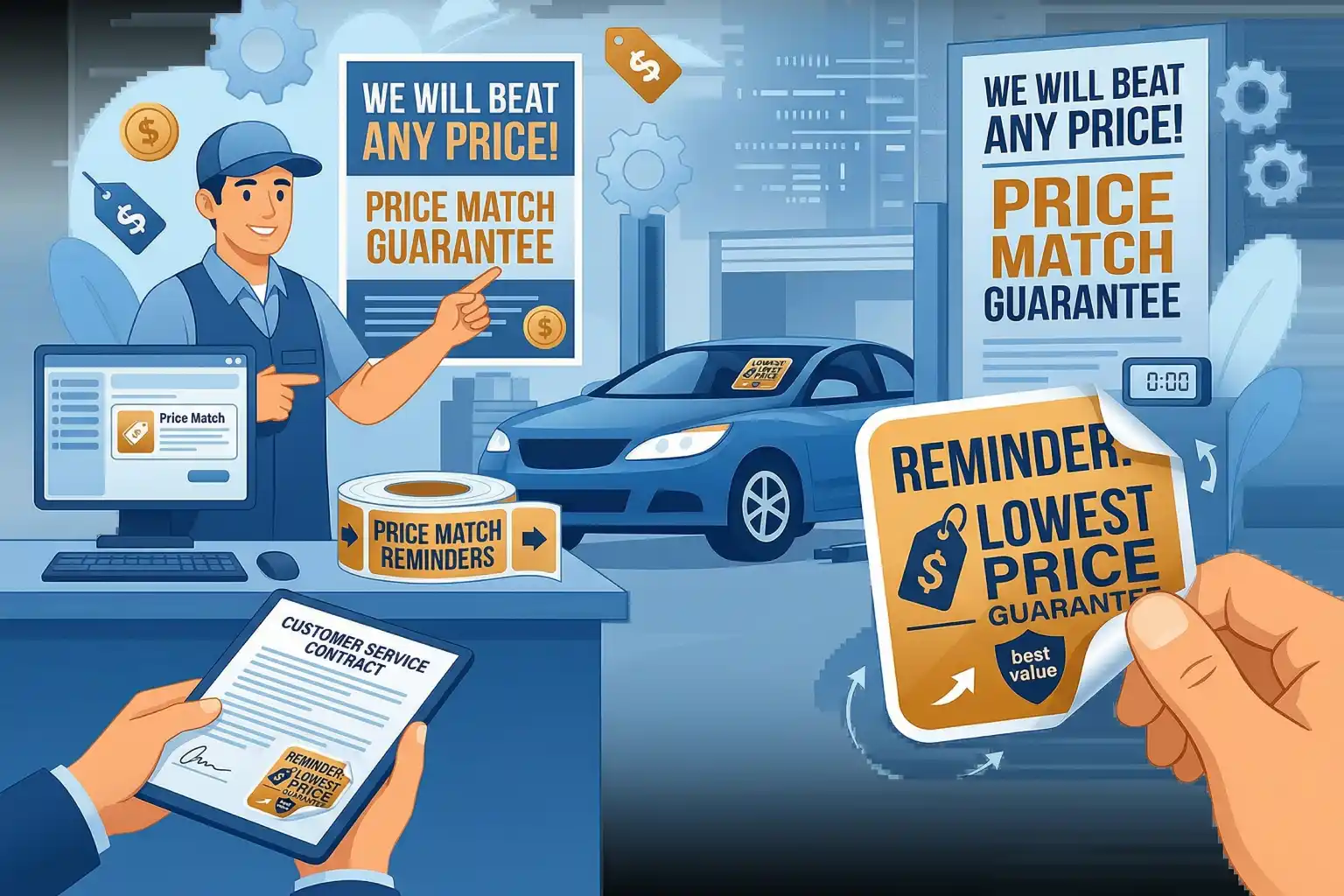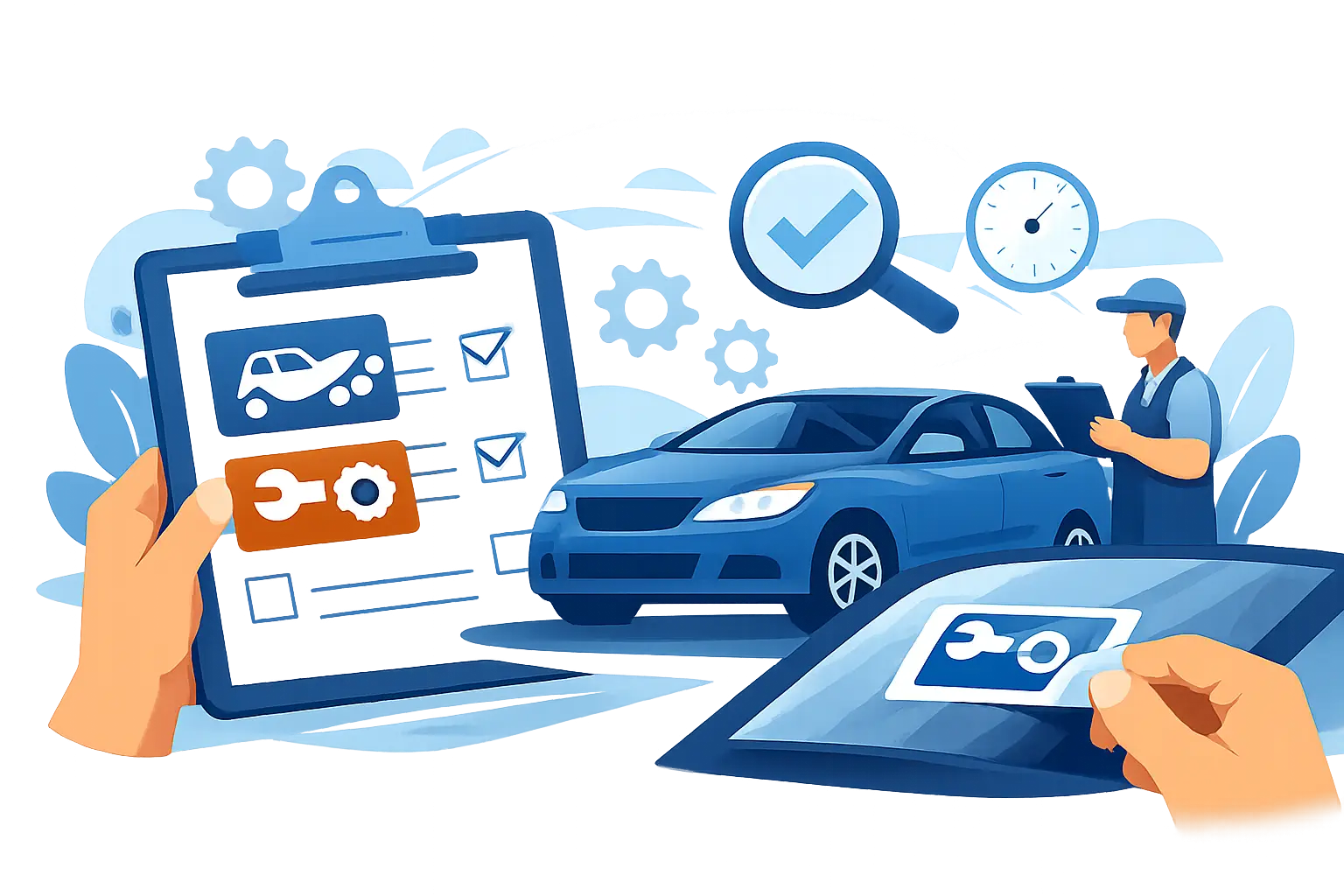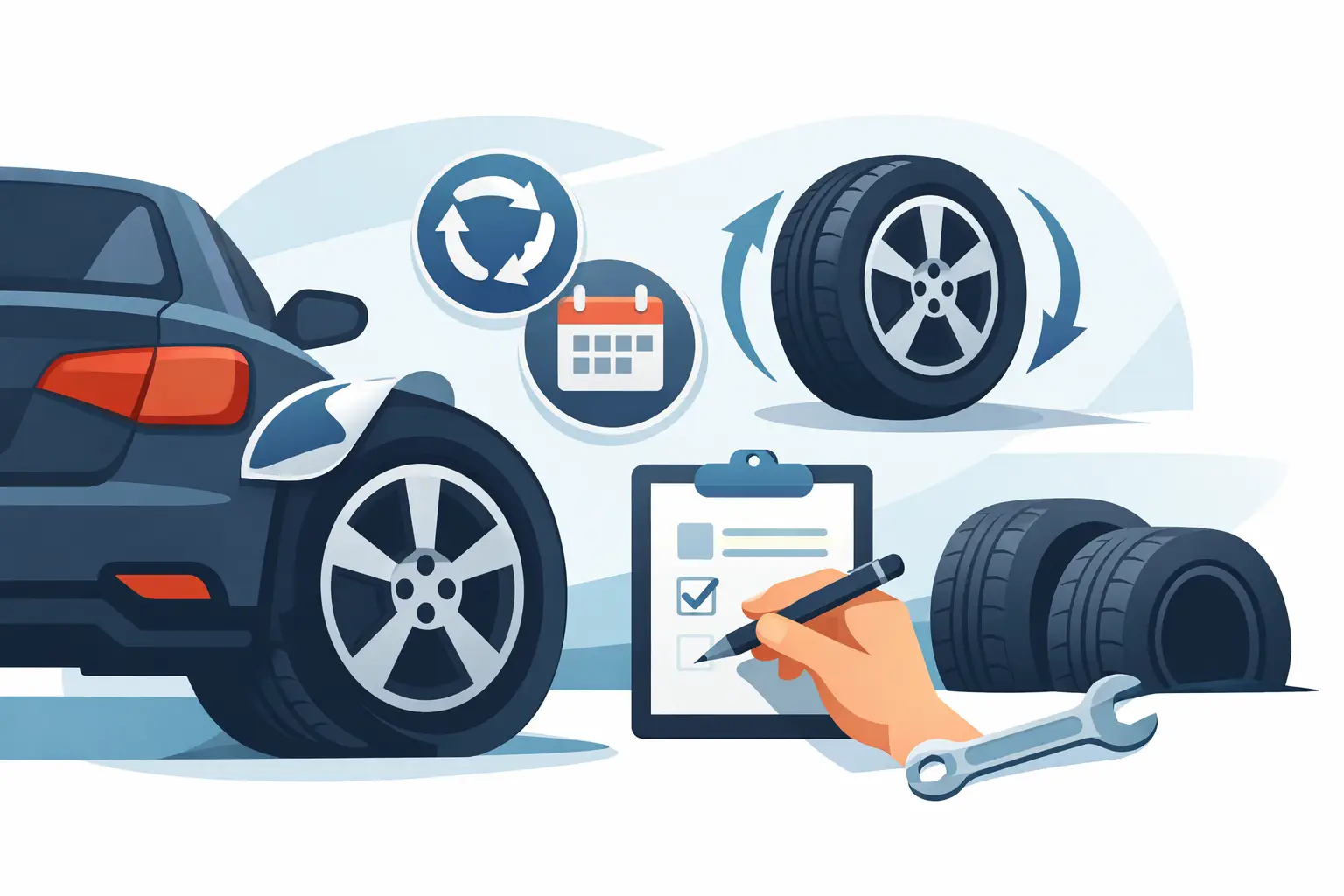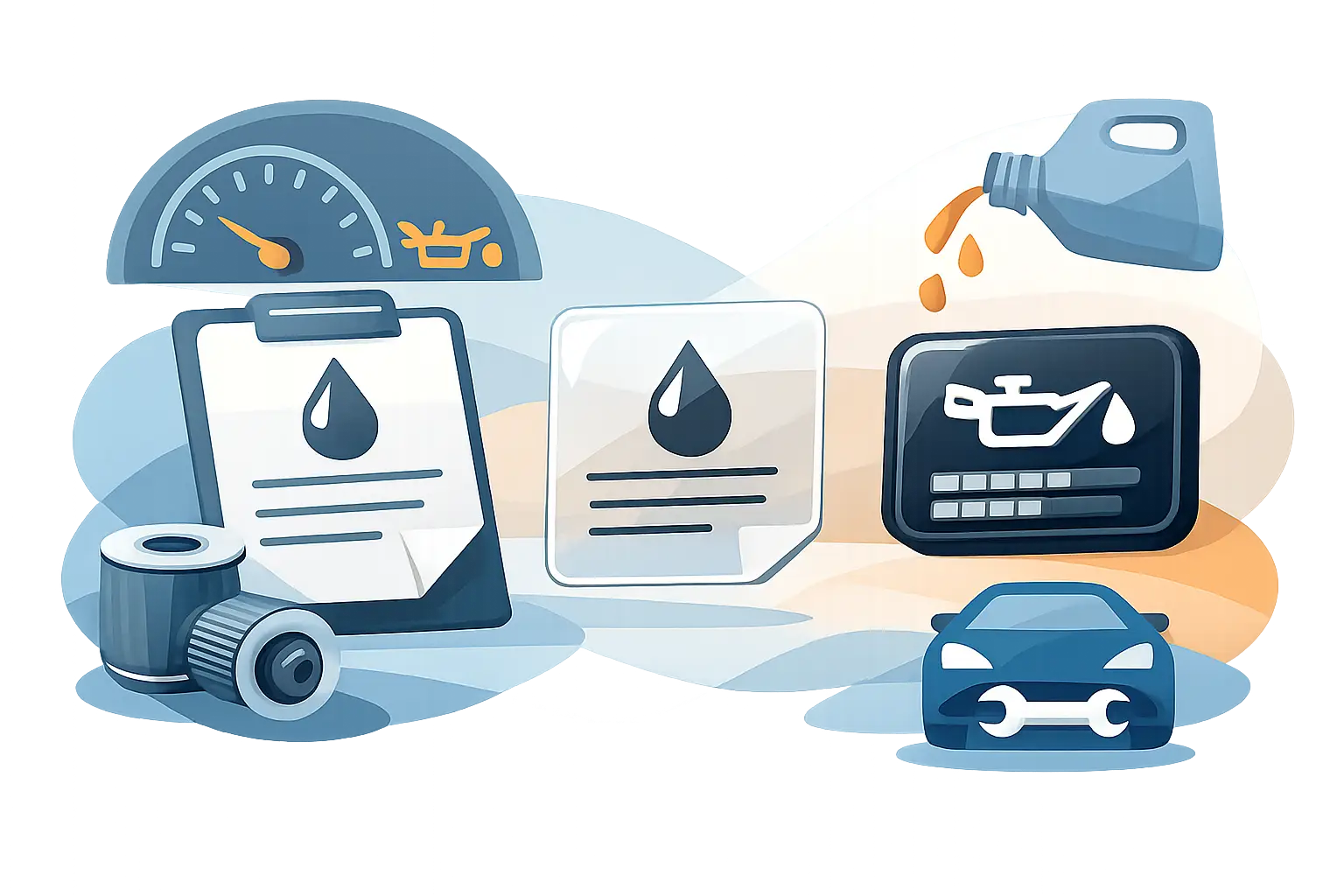

A customer leaves after an oil change, tire service, or detailing appointment with one simple decision already made for later: where they are likely to go next. That is a big part of why shops need branded reminder labels. They do more than mark a due date. They keep your business name in front of the customer at the exact moment future service gets scheduled.
For shops that run on repeat business, that matters. Most customers are not comparing maintenance schedules every week. They are reacting to whatever reminder is easiest to see and easiest to trust. If your shop puts a clean, readable, branded label on the vehicle, you stay in that decision path. If you do not, you leave room for a competitor, a generic sticker, or no reminder at all.
Why shops need branded reminder labels for repeat business
A reminder label is a small print product, but it carries a lot of operational value. It tells the customer what was done, when service is due again, and who performed the work. That last part is where branding stops being cosmetic and starts doing real work.
A generic label can remind someone that service is coming up. A branded label reminds them which shop already handled the job. That distinction matters more than many shops realize. Customers do not always remember exact mileage intervals, but they often remember the name they saw on the last sticker. When your logo, phone number, and service details are right there on the label, your shop stays connected to the next visit.
This is especially useful in high-frequency service categories. Oil changes, tire rotations, re-torque checks, detailing follow-ups, and seasonal tire storage all depend on return traffic. Branded reminder labels support that cycle without adding work for your front counter team.
Branded labels work because they are seen at the right time
There is a reason reminder labels keep holding their place in service operations even with text messaging, email campaigns, and digital booking tools. They are visible in the vehicle itself. That means the reminder shows up in context, not buried in an inbox or ignored with a push notification.
When a customer notices the label on the windshield, door jamb, or another service location, they are already in a setting where vehicle maintenance makes sense. The message is immediate: this service is due soon, and this is the shop that handled it last time.
Digital reminders still have value. Many businesses should use both. But digital systems depend on clean contact data, consent, timing, and open rates. A printed reminder label has a simpler job. It stays put, stays readable, and keeps working after the customer has left your lot.
They support retention without increasing ad spend
Most shops spend a lot more money trying to get a new customer than keeping an existing one. That makes retention tools practical, not optional. A branded reminder label is one of the lowest-cost ways to encourage a return visit.
Think about what it replaces. Without a visible reminder tied to your business, the customer may postpone service, forget your name, search online at the last minute, or choose whichever location is closest when the dashboard light comes on. A label reduces that friction. It gives them the service timing and your identity in one place.
This is not a flashy tactic. It is a repeatable one. Shops that build steady revenue usually win through consistent follow-up points, and reminder labels are one of the easiest follow-up points to control.
Why shops need branded reminder labels for trust
Trust in service businesses is built through details. Customers notice whether paperwork is clear, whether the vehicle is handled properly, and whether service recommendations feel organized rather than improvised. A branded reminder label adds to that impression.
When the label is cleanly printed, easy to read, and matched to your business identity, it signals that your process is established. It says your shop has standards. It says this was not a rushed transaction. That matters for independent shops competing with larger chains and for dealerships that want every touchpoint to reinforce professionalism.
A poor label can do the opposite. If handwriting is messy, adhesive fails, or the layout is hard to read, the customer may not say anything, but the impression is there. In a busy shop, those small impressions stack up.
The best reminder labels also help your team
This is not only about the customer side. Branded reminder labels can make life easier inside the shop as well.
Standardized labels reduce inconsistency at the service desk. Advisors and technicians know where to write key information. The format is familiar. The message is clear. That can help reduce missed fields, unclear return dates, or labels that do not reflect the service performed.
Different service lines often need different reminder products. Oil change stickers are not the same as tire re-torque labels. Tire storage reminders, maintenance light stickers, detailing reminders, and PDI or CSI labels each serve a different purpose. When those products are designed for the actual workflow, the shop moves faster and communicates more clearly.
That is where working with a supplier that understands repeat-use automotive print matters. You are not buying a novelty sticker. You are buying an operational tool.
Branding is useful, but clarity comes first
There is a trade-off here that smart shops should pay attention to. A branded label should never be so crowded that the service details become harder to read. If your logo is too large or the design is overly busy, the label stops doing its main job.
The best branded reminder labels balance identity with function. Your shop name, phone number, and logo should be clear, but the due date, mileage, and service type need to stay front and center. Good print design in this category is not about decoration. It is about usability.
That also applies to durability. A label that curls, fades, or smears too quickly does not help retention. Material quality matters because these products are handled in real shop conditions and stay in the vehicle over time. For shops ordering in volume, consistency from batch to batch matters just as much.
Different shops use branded reminder labels differently
Not every business will use the same approach, and that is fine. An oil change center may focus heavily on mileage-based windshield stickers. A tire shop may get more value from re-torque reminders and seasonal tire storage labels. A dealership may want a broader set that includes service intervals, inspection reminders, CSI prompts, and dealer identification.
The point is not to use every label type. The point is to use the right reminder product for the services that drive repeat visits. If a label connects directly to a recurring revenue stream, it deserves attention.
Customization also depends on volume and workflow. Some shops want full-color branded labels with a polished look. Others need simple, fast-turn products that are easy to write on and easy to apply all day. There is no single perfect format. There is a best fit for how your service department actually operates.
Small print products can carry a lot of brand weight
A shop does not need every customer touchpoint to be dramatic. It needs them to be consistent. Branded reminder labels help reinforce your name in a practical way, tied to a service the customer already purchased and will likely need again.
That makes them different from broad advertising. They are specific, timely, and attached to real maintenance behavior. Used properly, they support retention, strengthen trust, and keep your business visible between visits.
For shops that care about repeat traffic, that is reason enough. And if you are ordering reminder products anyway, adding your brand to them is not extra polish. It is part of doing the job right.
Shops that stay busy usually do not rely on one big marketing move. They get the small operational pieces right, again and again, until those pieces turn into steady customer return.