A vehicle can be fully cleaned, fueled, and ready for handoff, then still get delayed because one small step was missed. That is exactly where pdi inspection stickers earn their place. They give service departments, detail teams, and dealerships a simple way to mark completion, flag status, and keep pre-delivery work visible without slowing down the process.
For most stores, PDI is not just a checklist item. It is a handoff point between departments. Sales wants the unit ready on time, service wants the inspection done properly, and management wants fewer mistakes at delivery. A well-made sticker sounds basic, but in daily operations it solves a real problem: it puts the right information where people can see it, fast.
What pdi inspection stickers are actually doing
PDI stands for pre-delivery inspection. In practical terms, that means confirming a vehicle has gone through the required checks before it reaches the customer. The exact inspection points can vary by store, OEM requirements, and whether the vehicle is new, used, or part of a dealer trade. The need for clear identification does not vary much at all.
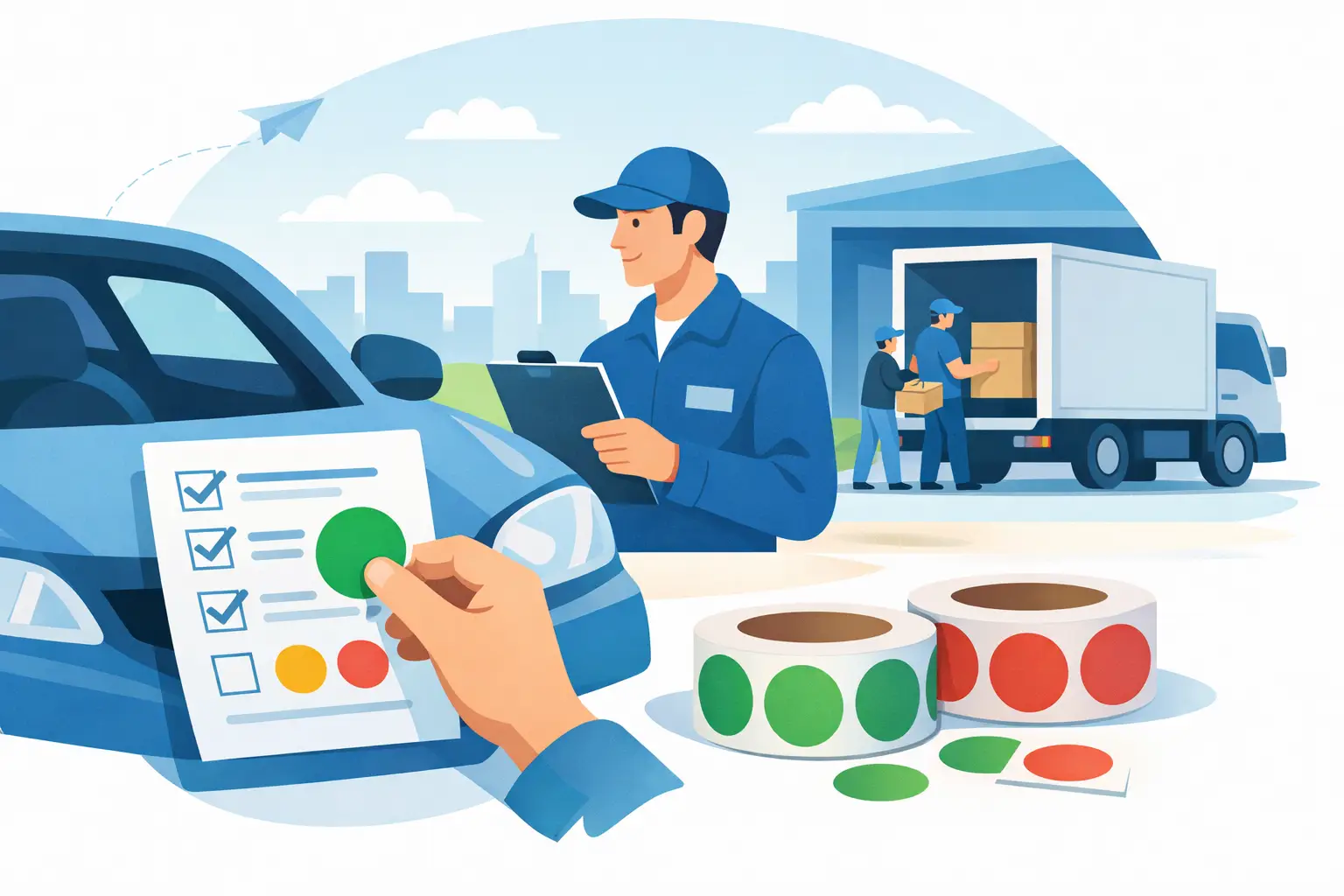
PDI inspection stickers act as a visible marker that the process has been started, completed, or reviewed. Some shops use them on windshields, side glass, paperwork jackets, or internal tracking systems. Others use them as a final confirmation after inspection and prep are complete. Either way, the sticker is doing more than labeling a car. It is supporting accountability.
That matters because pre-delivery work often involves multiple people touching the same unit. A technician may complete the mechanical check, a detail team may handle cleaning and appearance, and a coordinator may verify final readiness. If the status lives only in someone’s memory or a busy digital queue, mistakes happen. A physical sticker gives the team one more reliable checkpoint.
Why dealerships and service departments still rely on them
A lot of operational tools have gone digital, but physical process markers remain useful because they are immediate. A pdi inspection sticker on the vehicle is visible from across the lane or lot. No login, no tablet, no call to another department. For fast-moving stores, that simplicity is part of the value.
There is also less room for miscommunication. If a vehicle has not been marked, someone knows to stop and verify. If a sticker includes technician initials, date, stock number, or inspection status, the next person in line has enough information to move the job forward or ask the right question.
The bigger the inventory flow, the more important this becomes. High-volume dealerships do not lose time only from major issues. They lose time from small, repeated interruptions – vehicles waiting for signoff, staff asking for status, or last-minute scrambles before delivery. Stickers help reduce that friction.
What to include on a PDI sticker
The best design depends on how your store handles workflow. Some operations need a simple pass/fail or completed marker. Others want room for dates, unit numbers, advisor names, or internal notes. There is no single format that works for every department, which is why choosing the right layout matters.
At minimum, most pdi inspection stickers should make it easy to identify the vehicle status and who handled the inspection. If your process includes secondary review, that can be built in as well. A sticker with too little information may not answer enough questions. A sticker with too much information can slow people down and become hard to read at a glance.
That trade-off is worth considering before ordering. A compact sticker works well if your team already has a strong digital or paper process behind it. A more detailed sticker makes sense if the sticker itself is serving as a primary operational checkpoint.
Common fields that add practical value
Shops and dealerships often include the inspection date, technician initials, stock or RO number, and a basic completion indicator. Some also add branded identification so the sticker supports both internal process and a professional appearance. If your store uses separate teams for mechanical prep and detail, a dual-signoff layout can be useful.
The point is not to turn a sticker into a full form. The point is to include enough information that the next person can act without guessing.
Material quality matters more than most buyers think
A PDI sticker is a working product. It has to stay readable, apply cleanly, and hold up through handling, temperature changes, and lot conditions. If the adhesive fails too early or the print smudges during use, the sticker stops being a tool and becomes waste.
This is one area where cheap stock can cost more than it saves. Poor material quality leads to stickers curling on glass, tearing during application, or fading before the process is complete. In a busy department, even small failures create rework.
Reliable print quality matters too. If staff need to write on the label, the surface should accept pen or marker without smearing. If color is used for status coding, it should stay consistent across orders. Operational products need repeatable results. That is what buyers should be looking for.
Custom vs. generic pdi inspection stickers
Some businesses do perfectly well with a generic PDI label. If the need is straightforward and the process is standardized, stock designs are efficient and affordable. They are easy to reorder, easy to train around, and often the fastest route when you need product on hand quickly.
Custom stickers make more sense when the workflow is specific to your store or group. If you want your dealership name, branded layout, internal check fields, or a format that matches how your team already works, custom is usually the better investment. It can also help create consistency across departments or across multiple rooftops.
There is no automatic right answer here. Generic is strong when speed and simplicity matter most. Custom is stronger when process control and brand consistency are part of the goal. Many dealerships use both – a stock option for general inventory flow and a custom version for final handoff or department-specific use.
Choosing the right size and layout
Size affects usability more than buyers sometimes expect. A sticker that is too small can be hard to read or write on. One that is too large may clutter the glass or take up valuable space already used for pricing, stock information, or internal tags.
For most PDI applications, the best size is one that can be read quickly from outside the vehicle and still leave enough room for handwritten details. Clean spacing, strong contrast, and a simple field structure usually outperform crowded designs. Fancy layout is rarely helpful in a service environment.
Think about who is using it. A technician wearing gloves, a lot attendant moving fast, and a service manager scanning rows of vehicles all need clarity. The sticker should support speed, not demand extra attention.
How pdi inspection stickers improve day-to-day operations
The biggest benefit is consistency. When every vehicle moves through the same visible process marker, fewer steps get skipped. Teams spend less time tracking down status, and managers get a clearer picture of what is ready and what is not.
They also help during busy periods when normal communication starts to break down. End-of-month pushes, high delivery volume, dealer trades, and used vehicle intake all create pressure. A visible inspection label gives your team one more layer of control when the pace picks up.
There is also a customer-facing effect, even if the sticker is primarily internal. A dealership that runs a clean, organized delivery process looks more professional. Customers may never think about the label itself, but they notice when the vehicle is ready on time and the handoff feels prepared.
What to look for in a supplier
If you order these products regularly, speed and consistency matter just as much as price. You want a supplier that understands automotive workflow, produces dependable print quality, and can deliver reorders without shifting colors, sizes, or material performance.
Quick production is not just a convenience. Running out of a daily-use operational sticker can disrupt process faster than most office supplies ever would. That is why a specialized print supplier is often the better fit than a general printer. Shops and dealerships need products built for repeat use, not one-off design experiments.
StickerPlanet Canada fits that model by focusing on practical automotive print products used every day in service and dealership environments. That kind of specialization matters when you need labels that work the same way from one order to the next.
Small product, real operational impact
PDI inspection stickers are not complicated, and that is part of their value. They help teams mark progress, reduce missed steps, and keep vehicle delivery organized with a tool that is easy to use and easy to scale. For dealerships and service departments, that kind of reliability is worth more than anything flashy.
If your current process depends too much on verbal updates or scattered notes, a better sticker can clean up more than the glass it goes on. Sometimes the fastest way to tighten operations is to make the status impossible to miss.